Written by: Mümin İNAN | Founder, MAC ART
Companies often grow in operations without moving at the same pace in communication.
New investments are made, production capacity increases, new markets are entered, teams grow. Yet how the company is perceived from the outside can remain a few years behind.
This gap matters especially for senior management.
Because today a company’s first impression is often not formed in a meeting room. The website, LinkedIn, presentation language, digital appearance and the brand’s overall manner form an opinion about the company before the first meeting even takes place.
So the issue is not merely “looking good”.
The issue is being able to represent the point the company has actually reached.
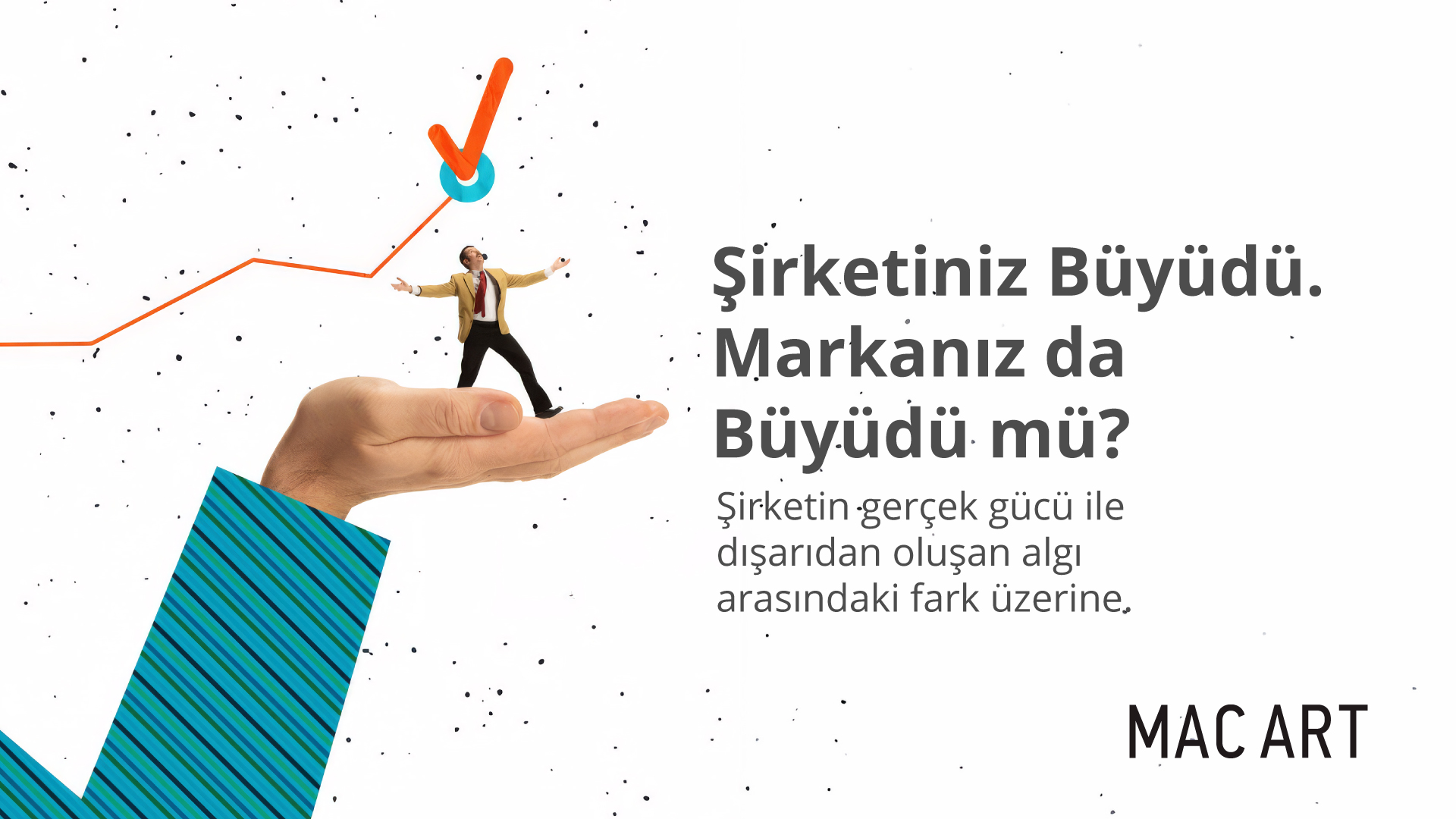
Are the growing company and the visible brand in the same place?
Over the years I have seen a similar picture in many companies.
The company is quite strong inside. Production infrastructure, people, financial capacity or sector experience has reached a serious level.
But from the outside, not all of that strength is visible.
Sometimes an old website, sometimes a scattered brand language, sometimes a communications structure far below the company’s scale, overshadows it.
The risk here is not only aesthetic.
This gap in perception can affect new customer acquisition, hiring, investor meetings, export contacts and even the company’s pricing power.
Because companies are judged not only by the work they do, but by how they represent that work.
Communication is no longer a marketing-department issue
Today brand communication cannot be seen as the responsibility of the marketing team alone.
It is a management issue.
How the company is positioned in the market, how much trust it gives, at what level it is perceived and how it differentiates from competitors should be part of senior management’s strategic agenda.
There is an important distinction here too:
Communication is not making the company look larger than it is.
The right communication makes visible the value the company already has.
A few questions that belong at the management table
When a company evaluates its own communication, these questions can already tell a lot:
- Does our company’s appearance today really represent the level we have reached?
- Can someone seeing us for the first time understand our scale and expertise?
- When we are compared with competitors, is our difference felt clearly?
- Does the customer evaluate us only on price, or is there a separate value created by our brand?
If the answers to these questions are weak, it may be necessary to look at the brand’s basic communications structure before spending more on advertising.
Growth should have a communications counterpart
A new factory, a new product group, export, new markets or a new service model…
Each of these is an important development for the company.
But if these developments are not reflected in how the brand is told, the outside perception does not change. The first impression is often formed before a meeting even takes place.
If the company grows while the brand stays in the same place, a visible gap forms after a while.
I think this is exactly the point senior management should watch.
The brand should not trail the company. It should grow with it.
In 30 years of working with companies from different sectors, this has been one of the issues I have seen most often.
Sometimes the company is stronger than it thinks, but cannot show it well enough.
Sometimes the brand looks strong but there is no matching substance inside.
What is healthy is for these two sides to move closer to each other. Corporate identity exists precisely to build that alignment.
That is why it may be useful, from time to time, to ask this question at the management table:
Our company has grown. Did our brand grow with it?
