Written by: Mümin İNAN | Founder, MAC ART
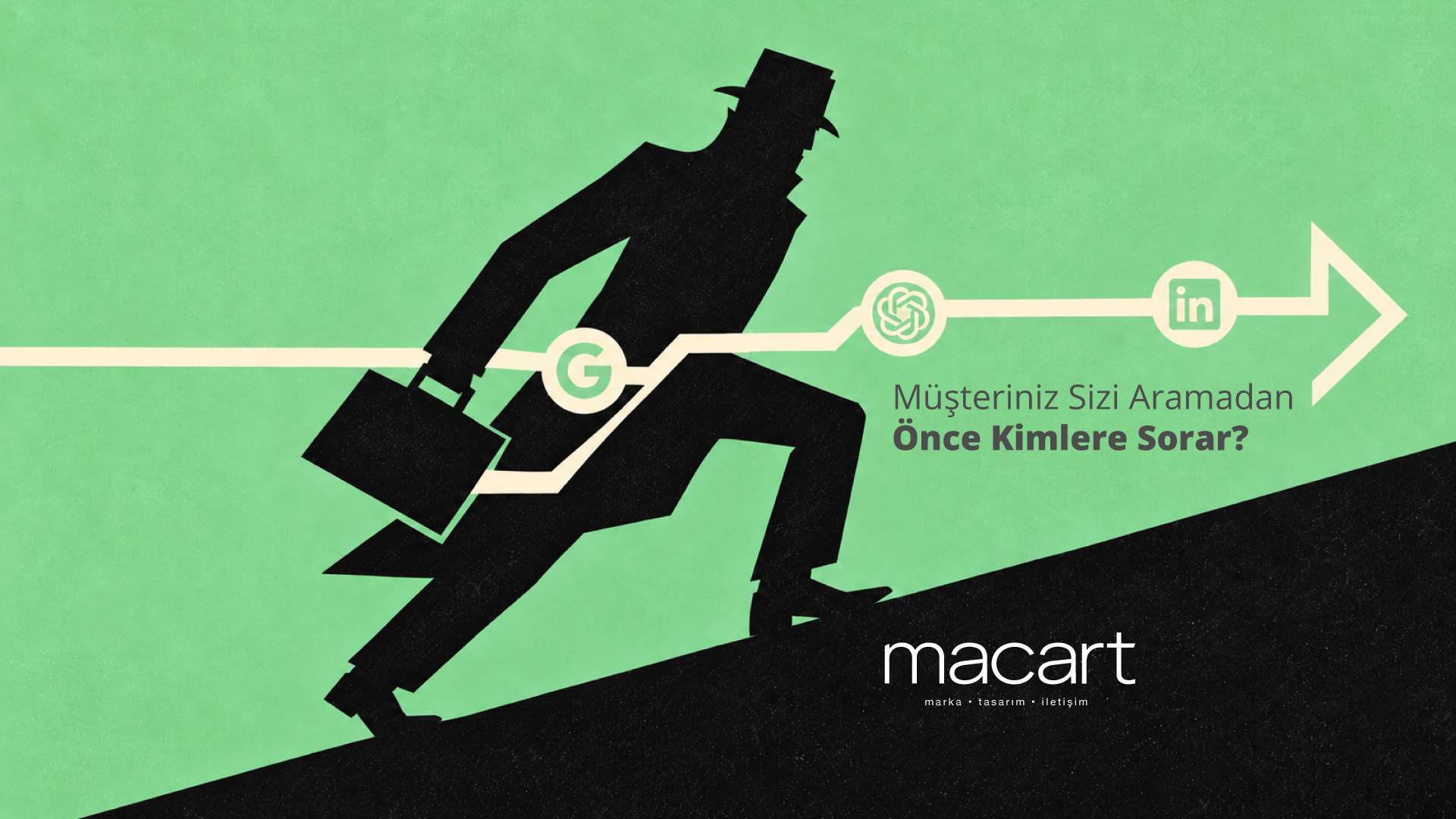
When a customer calls you, the buying journey is not starting; it is often already at its last stage. They may already have searched on Google, reviewed your website, looked up your company and your people on LinkedIn, asked former clients and learned from tools such as ChatGPT which firms stand out in your sector. That is why the first question they ask you is not really their first question. It is there to confirm the information they have gathered and the view that has already formed in their mind.
The phone call that is your first contact is, for the customer, usually the final check.
Trust sits with evidence, not promises
Customers trust the proof that backs a brand’s promises more than the promises themselves. Every company says it is high-quality, innovative, reliable and customer-focused. What creates the difference is the trail it leaves online: completed projects, client comments, executives’ posts, employee experience and the consistency of the message across channels. Sometimes a single sentence from a former client is more convincing than a corporate presentation prepared over weeks.
Trust is not a quality a brand announces. It is a judgement that forms when independent sources point to the same conclusion.
The person on the call is not the only one deciding
The buying decision is not made only by the person who speaks with you. A manager who never joins the meeting, a technical specialist, a finance lead or a trusted acquaintance of the company owner can still shape the preference. Edelman and LinkedIn’s 2025 B2B research calls these people “hidden decision-makers” and shows that they influence the choice even when they stay out of sight. Gartner’s B2B research finds that a significant share of buyers prefer to research without speaking to a sales representative.
The implication is clear: your brand must earn trust not only from the person who calls you, but also from decision influencers whose names you may never learn.
Digital reputation is larger than the story on your website
A brand’s digital reputation is larger than the story it tells on its own website. Search engines, social networks, client reviews, digital publications and generative AI systems gather the traces a brand leaves across different sources. The customer meets that combined narrative before they call you. If the sources give the same sense of trust, they arrive at the conversation curious; if the information is missing, contradictory or overstated, they arrive with doubt.
That is why the right question is not “Where did the customer find us?” The right question is this: when the customer found us, what story did they see?
Before they call, customers form a view of you. That view is built together by your website, client comments, your projects, your social posts and the information AI systems return. When those sources tell the same story, trust grows; when they contradict one another, trust weakens. A phone call is often not the start of a decision, but the confirmation of a view that already exists. Today the buying decision begins to take shape while the brand is not yet in the room.
